OPINION: Vicenzaoro 2026: What the Trade Should Actually Take From This Year’s Show
Reading Time:
1 min {{readingTime}} mins
Vicenzaoro January 2026 didn’t present a single headline trend — and that, in itself, is the headline.
Instead of a unified aesthetic direction, the show revealed an industry that is re-engineering itself in real time: adjusting to sustained high gold prices, cautious consumer spending, rising production costs, and increasing pressure on differentiation. The brands that stood out weren’t chasing fashion; they were solving problems.
For a B2B audience, Vicenzaoro this year was less about inspiration and more about strategy.
Design Is Being Asked to Work Harder
Modular, stackable and transformable jewellery dominated across price points — not because it’s new, but because it makes commercial sense in the current climate.
For manufacturers and brands, modularity:
- increases perceived value without proportional material cost
- extends SKU life
- supports upselling and repeat purchase
- and reduces reliance on constant newness
This isn’t about playful styling. It’s about inventory efficiency. One core design that can be sold, restyled and replenished in multiple configurations is far more resilient than a single-use statement piece.
Design at Vicenzaoro 2026 was visibly aligned with how jewellery is now bought and worn — fewer items, worn more often, expected to do more.
Coloured Gemstones Are Now a Commercial Tool
What changed noticeably this year was not the presence of coloured gemstones, but the confidence with which they were positioned.
Emeralds, sapphires and rubies were no longer treated as niche alternatives to diamonds. They were central to collections — often framed as emotional anchors, not just aesthetic variation.
For the trade, this matters because coloured stones:
- allow price flexibility in high-gold environments
- create visual differentiation without complex metalwork
- support storytelling at point of sale
- and respond to consumer fatigue with homogenous diamond assortments
This is no longer a design gamble. It’s a margin and messaging strategy.
Gold Pricing Has Forced Smarter Manufacturing
No exhibitor was ignoring gold costs — but the stronger ones were clearly designing around them.
Key responses included:
- lighter-weight constructions
- hollow or semi-hollow techniques
- mixed metals used structurally, not decoratively
- and designs that maintain scale without mass
What Vicenzaoro highlighted is that design and manufacturing are now inseparable. Brands that treat production constraints as a downstream problem will struggle. Those integrating cost logic at the design stage are already ahead.
Technology Is Now a Competitive Requirement
The T.Gold halls reinforced a reality the industry can no longer sidestep: digital tools and automation are no longer optional, nor are they the enemy of craftsmanship.
The most compelling technology presentations weren’t about speed alone, but about:
- consistency across runs
- waste reduction
- cost predictability
- and protecting artisan labour from repetitive strain
For suppliers and manufacturers, this signals a clear divide emerging between businesses investing in scalable infrastructure and those relying solely on legacy processes. Vicenzaoro 2026 made it evident which side is better positioned for the next cycle.
Commercial Jewellery Is Being Rationalised, Not Reduced
Despite broader economic uncertainty, buyer activity at Vicenzaoro was strong — but focused.
Retailers weren’t looking for novelty overload. They were looking for:
- clear price architecture
- collections that can be explained quickly to consumers
- strong core lines with optional extensions
- and dependable replenishment models
The middle of the market hasn’t disappeared — it has become disciplined. Exhibitors who understood that performed noticeably better than those still presenting unfocused assortments.
High Jewellery’s Role: Direction, Not Volume
High jewellery at Vicenzaoro 2026 played its usual role — but with a subtle shift.
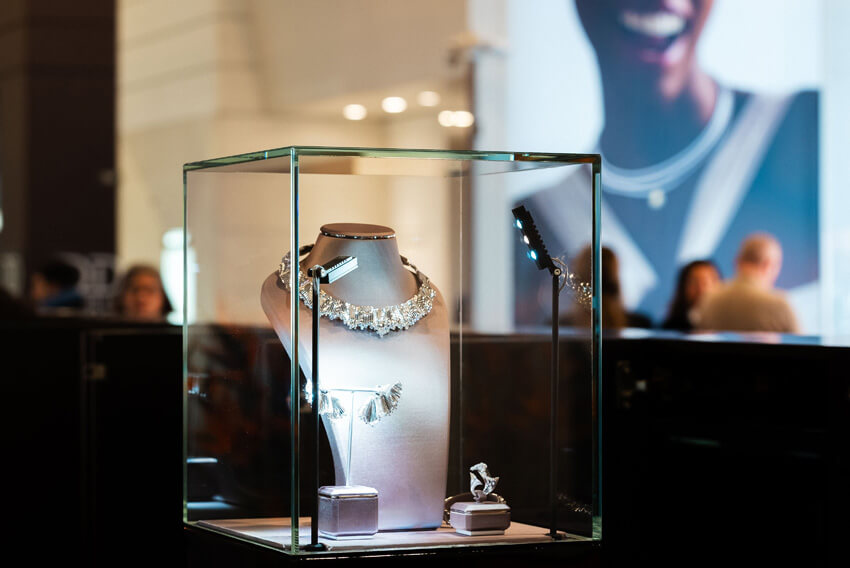
Rather than pure spectacle, many high jewellery pieces leaned into movement, modularity and contemporary colour stories. These weren’t just showpieces; they were concept drivers.
For the trade, high jewellery remains less about immediate turnover and more about:
- informing future silhouettes
- validating bolder gemstone choices
- and setting confidence levels for the rest of the market
Its influence will be felt downstream — particularly in design language and gemstone use.
The Underlying Message for the Industry
Vicenzaoro 2026 wasn’t optimistic in a naïve way. It was pragmatically confident.
The brands gaining traction are those that:
- understand their cost base
- design with operational reality in min
- offer flexibility without dilution
- and communicate value clearly, not loudly
For the B2B jewellery sector, the takeaway is straightforward: clarity beats creativity without structure. This is not a year for vague positioning or overextended collections.
The industry isn’t contracting — it’s recalibrating. Vicenzaoro showed that the businesses prepared to adapt intelligently, rather than defensively, are the ones setting the tone for 2026 and beyond.
Author:
Published: